
Mike Meier has 33 years of experience in the testing of hang gliders pursuant to HGMA certification, and has obtained HGMA certification on 97 different models of Wills Wing hang gliders in that period. He has been a member since 1980 of the HGMA Certification Review Committee, and in that capacity has reviewed 330 different manufacturer submissions of certification documentation. He also served as lead technical writer on the ASTM F37.40 task group that developed the ASTM design standards for weight shift controlled aircraft (trikes) that are now in use as the FAA accepted airworthiness standards in the U.S. for Weight Shift Controlled Light Sport Aircraft.
If you own a Wills Wing hang glider, you have probably noticed a placard on the keel of your glider that looks something like this:
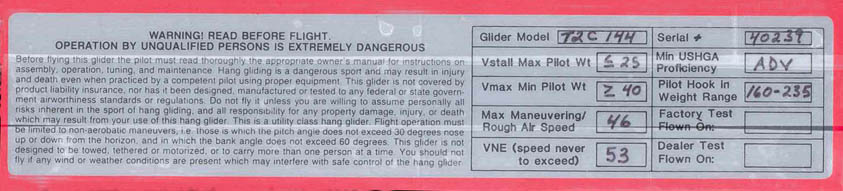
(Even if you own a hang glider made by another manufacturer, it likely has a similar placard on it.) And, if you have the owner’s manual for your Wills Wing glider, it will have a section in the front of the manual, where the information on the placard is repeated, and significantly expanded upon.
In fact almost no matter what kind of aircraft you may own, or fly in, you will find that one or more placards, as well as the pilot’s operating handbook, will list a number of “Operating Limitations.”
So what are these “operating limitations,” where do they come from, and why are they there?
Let’s take the last question first, and in the process let’s at least try to dispel a common misconception. You may hear pilots say that advisory statements like the ones on the placard or in the manual are there, “only for liability protection.” This is simply not true. Those advisory statements are there because they contain vital information that is critically important to your safety as a pilot.
Of course there is a connection between pilot safety and manufacturer liability – and it’s a simple one. If no one gets hurt – i.e. if there are no damages, then there is no liability for those damages. So, to whatever extent safety can be improved, liability exposure is reduced. But concern with liability exposure is not the driving consideration in determining the content or the presence of such advisory statements. The specific content of these statements is determined by fundamental design and engineering principles and the furnishing of this information to pilots is nothing more or less than what is required by recognition of and adherence to the most basic concepts of proper aircraft design and manufacture. (In particular, it is specifically not true that operating limitations or other advisory statements are made unrealistically conservative in order to provide “extra” protection against liability. First, the making of unrealistic statements of this nature does not provide any increase in protection against liability exposure – if anything it would indeed likely have the opposite effect. Second, the specific content of the operating limitations is clearly defined and mandated by industry standards for product testing and certification.)
So, back to the first two questions, what are these “operating limitations” and where do they come from?
In the simplest sense, operating limitations are nothing more or less than the original prescription for what capabilities you expect or require out of an aircraft – in other words, what is it that you want to do with this aircraft?
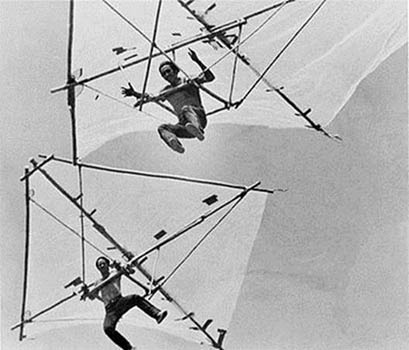
When hang gliding first got started in the US in the early 1970’s, an early motto was “don’t fly higher than you care to fall.” For this type of flying, formal airworthiness standards may not have been necessary.
However, it wasn’t long before pilots were flying higher than they cared to fall – even gliders like these bamboo bombers were flown at altitudes of more than 100 feet above the ground – and it wasn’t long before some of them started falling. By 1976, state of the art flex wing hang gliders had enough performance that one could do essentially everything we do today on hang gliders – glide and soar, gain altitude in thermals, and fly cross-country. Clearly, by this time, we needed some form of airworthiness testing. But at that time, there were still no formal industry testing standards.
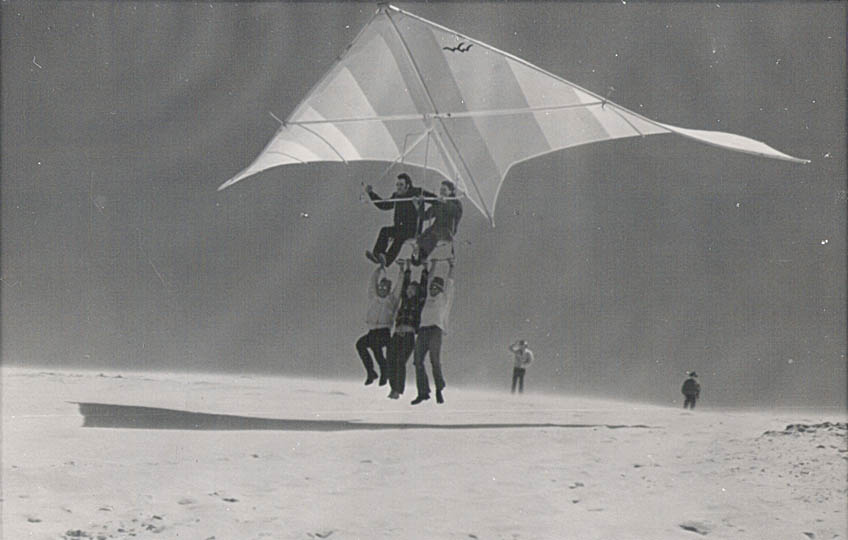
That’s not to say that there was no testing. This flight of five people on an SST in April of 1976, in 35 mph winds on a steep sand dune, was actually a very elegant and accurate way to perform a positive load test. But the industry needed a more structured program that could be used by all manufacturers and that would examine all aspects of glider airworthiness.
The Hang Glider Manufacturers Association Airworthiness Program
By 1977 the Hang Glider Manufacturers Association had been formed, and a set of airworthiness testing standards had been developed and implemented.
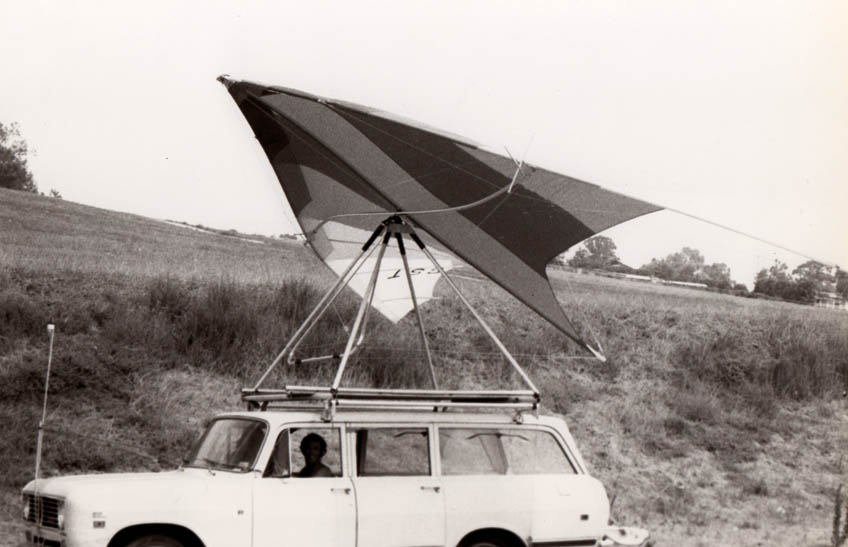
So what do these standards say about the structure and stability of hang gliders, and how do the operating limitations relate to the testing requirements in the standards?
As previously stated, the operating limitations are essentially the primary statement of what it is you want to be able to do with the aircraft. When the HGMA airworthiness standards were first developed, what we wanted to do was launch, glide, maneuver, soar, and land, and we wanted to be able to do all of these things without losing control of the aircraft, or having the aircraft suffer a structural failure. By 1977 we had seen incidents involving both structural failure and pilot loss of control in hang gliders, and so one purpose of the airworthiness standards was to define a range of operating parameters, or limits, within which a glider that met the airworthiness standards could be operated with a reasonable degree of confidence that it would not suffer a loss of control or structural failure.
What the HGMA certification standards do, then, is to allow each manufacturer, for each model and size of glider, to specify the same basic operating limitations that we would see if we looked in the Pilot’s Operating Handbook for any certificated aircraft:
- The allowable weight range for the pilot
- The maximum allowable maneuvering speed (Va – The maximum speed at which abrupt application of the controls is permitted)
- The maximum allowable speed (Vne – The speed never to exceed)
- The maneuvers permitted, including, if desired, aerobatic maneuvers.
Depending on the operating limits that the manufacturer specifies, the HGMA Airworthiness Standards then specify the tests and test values that the manufacturer is required to perform and document to obtain certification.
The HGMA Standards also provide a default set of minimum operating limitations which are:
- 46 mph maneuvering speed
- 53 mph VNE
- maximum pitch attitude to the horizon of 30 degrees nose up or nose down
- maximum bank angle of 60 degrees.
These minimum requirements are what are thought to be consistent with the intended use of the hang glider as an aircraft – essentially low speed soaring and gliding flight on a light-weight, foot launchable and foot landable aircraft. (For certain training and entry level type gliders, the HGMA standards allow for slightly lower values of Va and Vne if the glider is, by its design, limited in the maximum speed it can maintain.)
So how do these operating limits in turn generate required test values for the necessary airworthiness testing? To understand this, we need first to review a few basic ideas of aerodynamics:
Lift Versus Angle of Attack
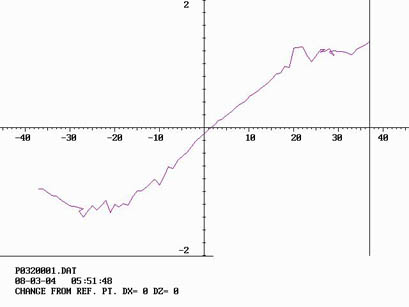
Wings produce lift roughly in linear proportion to the angle of attack of the wing. The image above is test data from an HGMA positive load test of the T2C 154. In that range of angles of attack where the wing is not stalled – the slope of the lift versus angle of attack graph is basically a straight line.
Lift Versus Speed
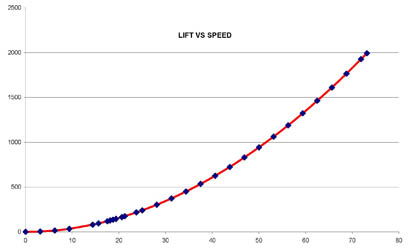
At a constant angle of attack, aerodynamic forces tend to vary with the square of the airspeed – if you double the airspeed, you multiply the aerodynamic forces by four. Triple the airspeed and you multiply forces by nine.
The relationships between lift and angle of attack, and lift and speed, result in the relationship between speed and angle of attack for normal, one G flight. At the highest angle of attack at which the airfoil will fly without stalling, you will obtain your lowest possible flying speed. As you reduce angle of attack from there, the aircraft will speed up to regain that one G of lift required to balance the force of gravity.
Maneuvering speed is defined as the speed at which you are permitted to apply an abrupt, full application of control – for example, an abrupt pitch up. Pitching up abruptly from a high speed can result in a combination of the high angle of attack associated with maximum lift (just before stall), with the high speed at which the pitch up was initiated. This results in higher than normal aerodynamic loading. If you want to have a maneuvering speed that is twice your stall speed, then you can expect that the lift generated in an abrupt pitch up from maneuvering speed to maximum lift angle of attack can be as high as 4 G’s, and your aircraft structure had better be able to handle that.
And in practice, we don’t cut it that fine – we always add a safety factor. Airplanes use a factor of 1.5; an airplane with a maneuvering speed of two times its stall speed would require an airframe capable of 6 G’s without failure.
In the HGMA standards, we use a slightly higher safety factor of 2.0. And we also don’t test using G loading – we test on a vehicle using the actual combination of high speed and maximum lift angle of attack.
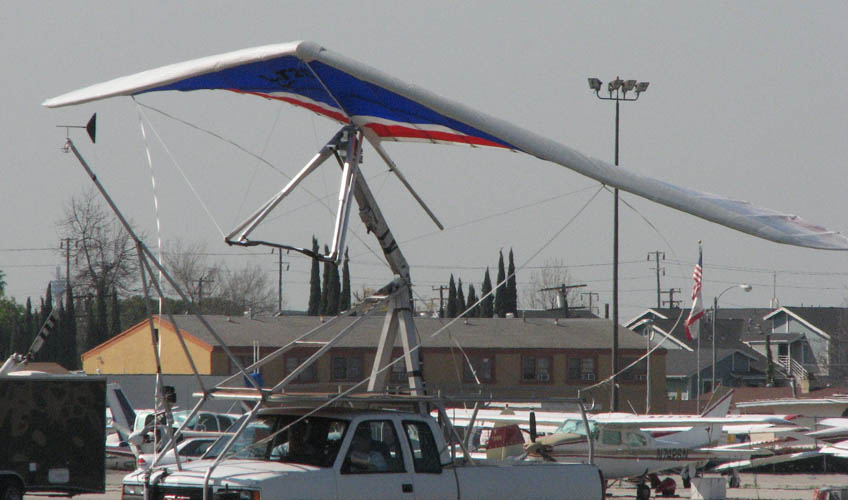
So, for the normal default HGMA maneuvering speed of 46 mph, we derive a required positive load test speed of 65 mph at maximum lift angle of attack – because 65 is equal to 46 multiplied by the square root of two. (Again, aerodynamic loads increase as the square of the airspeed.)
Following standard aviation conventions, a negative load requirement of 50% of positive load requirement is applied, resulting in a test speed of 46 mph for the negative 30 degree angle of attack test.
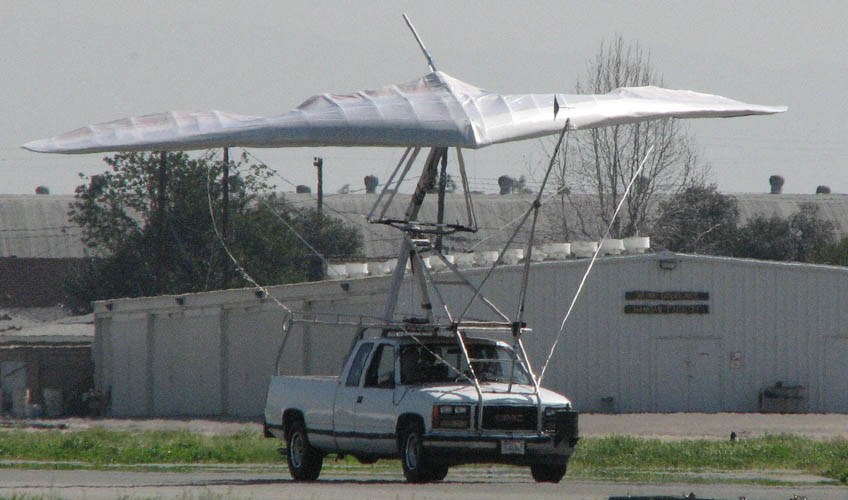
The HGMA also has a negative 150 load test, for which the required test speed is 32 mph. The purpose of this test is to test the glider’s structure at the angle of attack and in the loading condition that would occur approximately halfway through a low speed, turbulence induced forward tumble. (Because turbulence induced tumbles are thought to be primarily a low speed, stall induced event, a test speed of 32 mph provides the normal 2.0 safety factor for a tumble that might occur at 23 mph.)
Why a 2.0 safety factor?
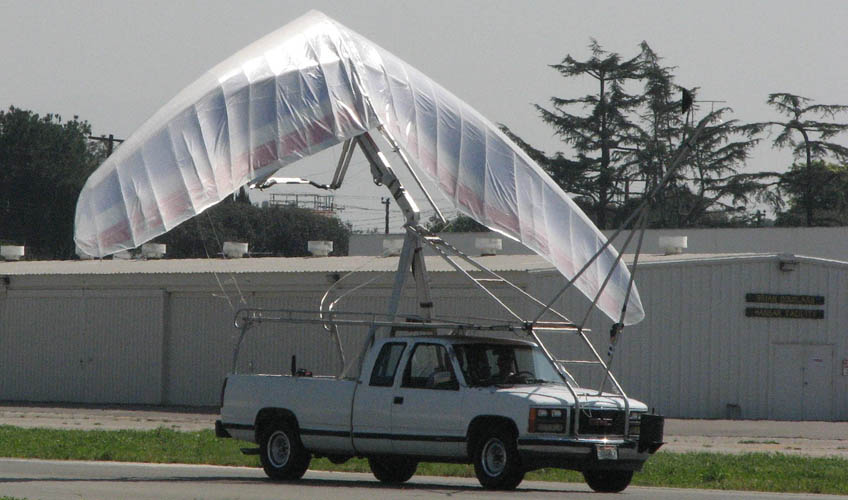
Why does the HGMA use a safety factor of 2 instead of the common aviation practice of 1.5 – isn’t that an example of an exaggerated limitation? There are a number of reasons why it is felt that the 2.0 safety factor is prudent for hang gliders:
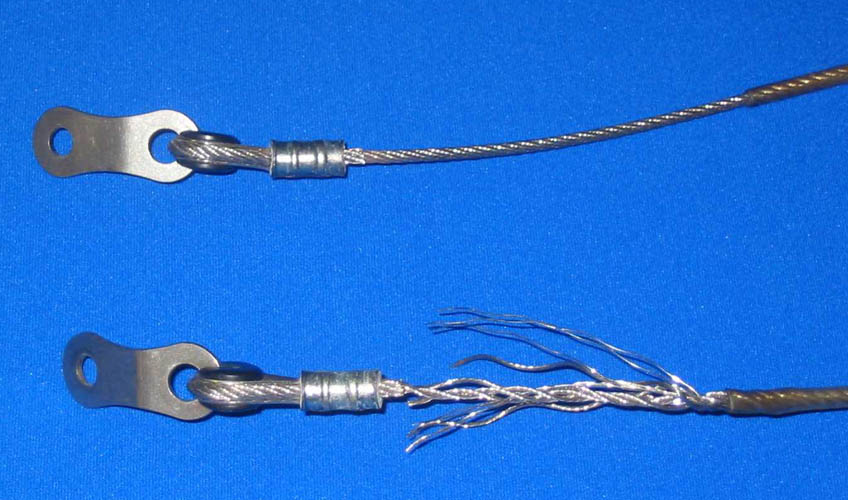
- Maintenance issues – Unlike the situation with FAA certificated aircraft, there is no regulatory requirement for maintenance or inspection of a hang glider, and there is a clear historical record of accidents and structural failures due to lack of maintenance.
- Operator Issues – Unlike FAA certificated pilots, hang glider pilots are, as stated in FAR Part 103, “not required to meet any aeronautical knowledge, age or experience requirements…” and, as a result, it cannot be assumed that they will understand or abide by prescribed procedures and limitations to the same degree as a certificated airman would.
- Gust factors – hang gliders operate at low speeds, so the affect of gusts on airspeed and angle of attack, and hence on loads imposed, is significantly greater than for higher speed aircraft.
- Dynamic Loading Effects – There is an aerodynamic phenomenon where during a rapid increase in angle of attack – such as during a rapid pitch up – the maximum lift coefficient of the wing can actually be greater than it would be during a gradual increase in angle of attack, due to a delay in the flow separation from the wing. We have observed this effect in hang gliders, and we have also observed cases where as a result of the rapid onset of such loads, the nose up pitching moment of the glider can overwhelm the control of the pilot, leading to a runaway pitch up motion. This can lead to a much more rapid and severe pitch up than the pilot may have intended, and consequently can result in markedly higher loads imposed on the glider’s structure.
It has been shown time and again that it is quite possible on a modern high performance flex wing to maneuver in such a way as to exceed the positive load structural capability of the glider, resulting in a positive load structural failure.
Why Pitch and Bank Angle Limits?
A fundamental design aspect of the vast majority of hang gliders is the fact that the pilot hangs suspended beneath the wing from a flexible tether, and depends for his ability to control the wing on that tether being positively loaded. During maneuvers that involve high bank angles, or severe nose up attitudes, there is a significant likelihood that the glider will run out of speed before completing the maneuver and that the pilot will become unloaded in the harness as a result, leading to a potentially dangerous loss of control of the glider. The result may be a knife edge side slip leading to the wing rolling under and the glider becoming inverted, or a tail slide leading to a forward tumble, or merely the glider coming to a stop while upside down, resulting in the pilot falling into the wing. All of these results have happened during aerobatic maneuvers, and have resulted in negative load structural failures, or unrecoverable loss of pilot control.
Aaron Swepston executes an aerobatic maneuver
Aerobatics – How do Operating Limitations relate to aerobatics?
Manuevering at high speeds creates the opportunity for imposing very high positive loads on the structure.
This photo sequence shows a positive load structural failure during a high speed pitch up maneuver.
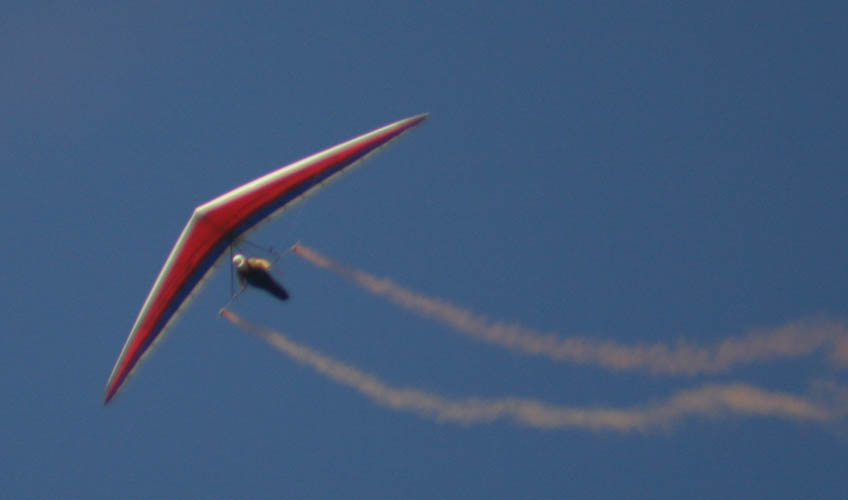
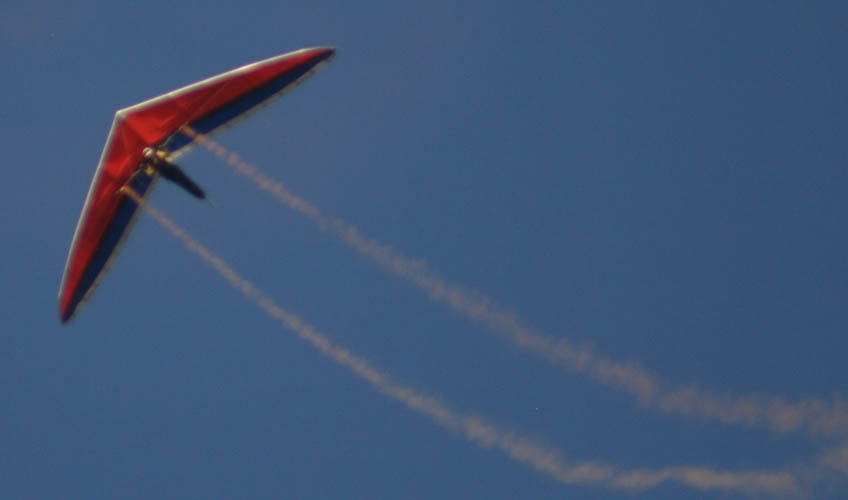
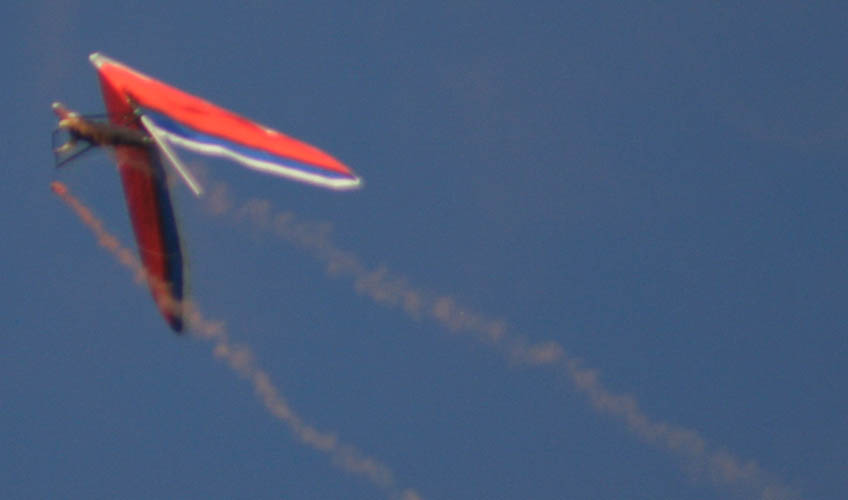
The link below is to a video of a positive load structural failure during a high speed pitch up maneuver.
The margins for error in losing speed over the top of an inverted maneuver are very small, and loss of control while inverted is therefore likely, which brings the negative load capability into the picture.
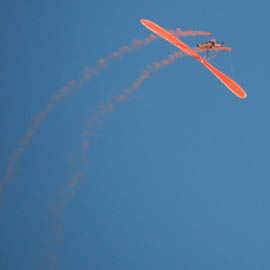
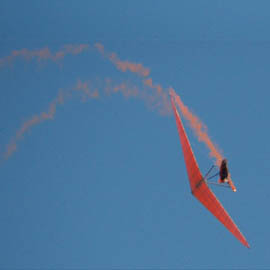
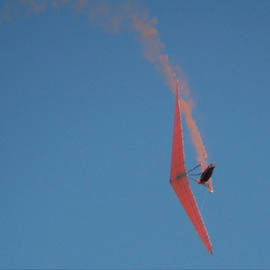
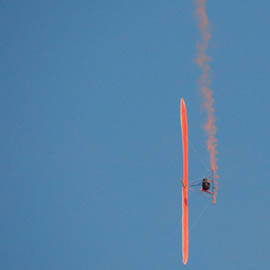
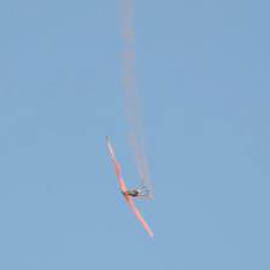
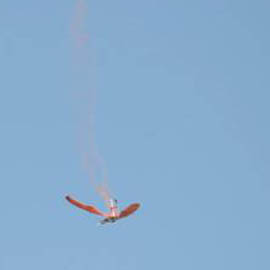
This photo sequence shows a loss of speed during an inverted maneuver, leading to a side slip, inversion, and failure.
The links below show two examples of loss of control in an inverted maneuver.
There is no particular mystery involved in the types of in-flight structural failures that happen during aerobatic maneuvers. Anyone who has manufactured and certified hang gliders has seen similar failures many times on the test vehicle. We don’t take every glider to failure in testing, but we fail enough of them that we have a pretty good idea of what the structural limitations are.
Certified Aerobatic Gliders?
It is also interesting to note that the HGMA has, and has had, since the beginning, a provision for certifying hang gliders for aerobatic maneuvers –
3.110 AEROBATIC MANEUVERS
If it is desired to certify the glider for aerobatic maneuvers (maneuvers in which the bank angle exceeds 60 degrees, or in which the pitch angle exceeds 30 degrees nose up or nose down), each such maneuver must be performed safely and documented on video.
Such documentation requires both ground based video from two different view points and on board video.
Pilot weight must be between 1 and 1.5 times the minimum required pilot weight. A calibrated airspeed indicator and accelerometer must be clear in the onboard video frame. Airspeed must be corrected to that of the free stream. If the airspeed attained in any such maneuver exceeds the previously determined Vne speed for the glider, then the highest airspeed attained in such a maneuver shall be used as the Vne speed, and the speeds used during structural testing shall be adjusted upwards accordingly.
In the 32 year history of the HGMA, 345 different hang glider models have been certified by 37 different member manufacturers. Not a single glider has ever been certified for a single aerobatic maneuver. Why?
Well, in order to provide the same relative level of airworthiness in an aerobatic glider, consider what the certification test requirements would be:
- The HGMA required positive load test speed is 1.23 times VNE
- The HGMA required negative load test speed is .868 times VNE
- The HGMA required negative 150 load test speed is .604 times VNE
- The HGMA required high speed pitch test speed is equal to VNE
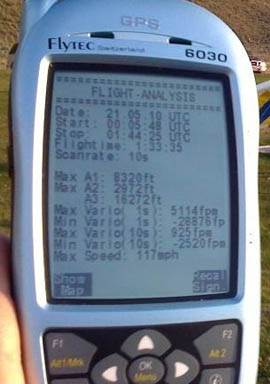
We know that speeds as high as 117 mph have been recorded in aerobatic maneuvers. Lets give ourselves every benefit here and assume that the 117 mph documented in the photo above is excessive. Let’s imagine that a truly skilled aerobatic pilot can perform all desired maneuvers without exceeding 80 mph.
If the maximum speed attained in the aerobatic maneuver is 80 mph, then to provide the same relative level of structural airworthiness and stability in accordance with the HGMA standards that we have now for soaring flight the required test speeds then become:
- Positive load test: 98 mph (instead of 65 mph now)
- Negative load test: 69 mph (instead of 46 mph now)
- Negative 150 load test: 48 mph (instead of 32 mph now)
- Pitch test speed 80 mph (instead of 53 mph now).
Take a look at the earlier photos of the T2C undergoing tests at the normal required HGMA speeds, and try to imagine the glider under more than twice that much load. Also consider that the maximum speed in the positive load test that existing test vehicles (which are highly modified to increase horsepower) are capable of is about 80 mph. (A hang glider produces a LOT of drag at maximum lift angle of attack at high speed.) Testing at this speed would allow for a VNE of only about 65 mph and a maximum maneuvering speed of only 56 mph – not high enough for most of the aerobatic maneuvers now being done. So it is easy to see that the technical challenges of both designing and testing a hang glider to be able to meet the airworthiness demands of aerobatic flight are substantial.
And yet the belief persists that hang gliders are inherently suitable for aerobatic flight. And in fact, the argument has been made that really there is no difference – with regard to the inherent airworthiness of the glider – between aerobatics and cross country soaring. After all, we sometimes see structural failures resulting from turbulence induced tumbles in soaring flight, and we sometimes see structural failures in aerobatic flight. What’s the difference?
But with an understanding of operating limitations and their relationship to airworthiness testing, we can see the difference. It is entirely possible to operate a hang glider for the purpose of soaring flight within the prescribed operating limitations. And if one does so, then a glider that meets industry airworthiness standards has a 100% structural safety margin relative to the maximum load expected to be encountered. By contrast, it is not possible to perform aerobatic maneuvers within these limitations, and the speeds, bank angles and pitch angles required to perform such maneuvers result in no safety margin at all. The two are not in any way equivalent.
And beyond the structural and stability considerations, there are the issues of control. Airplanes which are used for aerobatic flight are designed to be able to be flown inverted and under negative load, with the pilot retaining reliable control of the aircraft. As we’ve seen, hang gliders cannot be reliably controlled while unloaded or loaded negatively.
From a design and engineering point of view, therefore, with the equipment currently available, aerobatic flight in hang gliders can only be considered to be a purely experimental form of flight that takes place far outside the flight envelope for which the aircraft has been designed and tested.
What Is Wills Wing’s Company Position On Aerobatics?
You are likely to observe Wills Wing factory pilots and Wills Wing competition pilots performing aerobatic maneuvers. From time to time you will see photos depicting aerobatic maneuvers on our web site. Isn’t this inconsistent with all of the information we’ve presented on the subject thus far?
As a manufacturer, we have an obligation to test our gliders to beyond the normal operating limitations. We don’t claim to be able to test for every possible situation that one of our customers might find themselves in, but we want to explore as much of the flight envelope outside of the normal limits of operation as is practical and reasonable.
We also are not in favor of pursuing safety through regulation or prohibition – we are not in favor of taking judgment decisions out of the hands of the pilot, because we think that the pilot’s individual judgment and decision making are the most crucial components of the pilot’s safety, and because we believe that preserving the right of each of us to make our own judgments about the level of risk we choose to assume is fundamental to preserving our right to fly. (Consider this – the general public might well come to the judgment that any form of hang gliding is unreasonably unsafe – if we don’t have the individual right to elect a higher level of risk than what is judged to be reasonable by the general public, then we don’t have the right to fly at all.) We prefer education to regulation. We would not prohibit aerobatic flight in hang gliders even if we had the authority to do so.
But we are very concerned that there is a lack of understanding of the extremely elevated risks involved in aerobatic flight in hang gliders, and a lack of understanding of the degree to which hang gliders are inherently unsuited to this form of flight. We do not recommend aerobatics in hang gliders – there are many aircraft certificated for aerobatic flight in which this type of flying can be pursued with a much higher level of safety. And we do not support the promotion of aerobatic flight in hang gliders as a “normal” or “acceptable” use of the aircraft.