
12/29/05
Wills Wing T2’s Sweep Top Two Places At Japanese Competition Series Final Event
Kozo Abe, flying a T2 144, and Toshiyuki Katsura, flying a T2 154, took first and second place respectively in the recently completed 16th Tanzawa Sky Grand Prix hang gliding competition at the Tanzawa mountains in Japan. This was the final event of the 2005 Japanese Hang Gliding series. Conditions included thermals of up to 10 meter per second climb rates and cloudbases of 1700 to 2000 meters, and the competitors flew 50 km racing tasks. Kozo Abe reported that his T2 144 handled the turbulent conditions very well, in spite of his being at the bottom end of the glider’s weight range. Toshiyuki Katsura reported that he could directly feel the performance advantage that his T2 gave him in the competition.
12/25/05
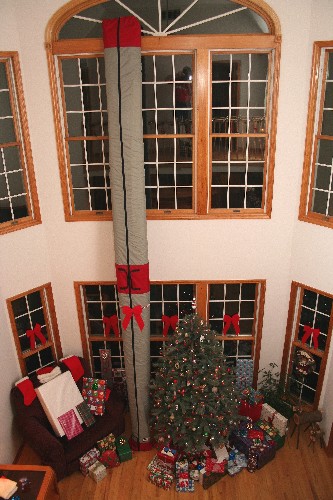
A Challenge for Santa
Once again….. Santa had a challenge getting all the presents under the tree at the Voight household in Pine Bush N.Y.
12/07/05
T2 Pilots Set New XC Distance Mark From Rio de Janiero
Brazilian T2 pilot Nader Couri sends this news:
Sunday, I and Alan beat the record of the city of Rio De Janeiro (take-off of the Pedra Bonita). The previous record was mine, 56 km, and now it passed to 87km (we land in Angra Dos Reis).
Nader Couri – WW T2
Alan Morris – WW T2
The photos are of my wing http://www.ozreport.com/9.246#0
Best Regards
Nader
12/07/05
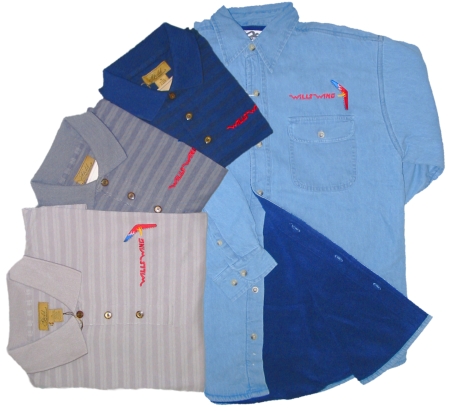
New WW Logo Apparel for Winter 2005
Just in time for the holidays we have two new WW logo garments – a classy golf shirtwith an interesting gloss and matte pattern and for those in colder climes we have a fully-lined denim shirt that’s more of a jacket than a shirt. See our Clothing section for more information.
11/16/05
Announcing the Wills Wing 2005 Fall Holiday Special
This year we are offering a holiday oriented Fall Special – designed to help you with your gift giving needs. Or, heck, give yourself a gift – you deserve it!
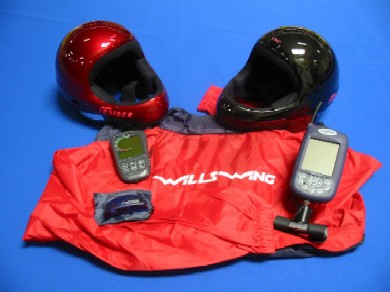
Between now and December 15th, you can save 20% on any Brauniger Flight Instrument, Charly Helmet, or Wills Wing Clothing Item. (Note, this special discount is limited to items that are currently in stock at Wills Wing)
For example –
- Save $296 on a Brauniger Compeo HG
- Save $52 on a Carbon Optic No Limit Helmet
- Save $8 on a Wills Wing Nylon Packaway Jacket
This offer is available on orders placed directly with Wills Wing, or through participating Wills Wing dealers. Please mention the “Fall Holiday Special” when you place your order to be sure you get your discount.
11/15/05
The Sport 2 175 Is Released
We are happy to announce the (long awaited) release of the Sport 2 175!
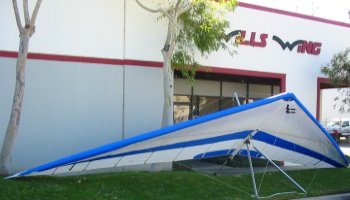
We have completed all vehicle testing and flight tested the first production glider, and we’re very happy with the results. One focus of the Sport 2 175 design and development program has been the suitability of the glider for pilots with body weights of 240 lbs and above. The Sport 2 175 utilizes stiffer leading edges to expand the glider’s weight carrying capacity significantly above what the area of the wing would otherwise suggest. At the same time, we have found that the handling for pilots as light as 160 lbs body weight remains nicely responsive, and the overall handling qualities across the entire pilot weight range are very characteristic of the Sport 2 model line: docile, nicely damped, predictable and forgiving. We are recommending 200 lbs body weight as the optimum transition point above which a pilot would likely prefer the 175 size over the 155 size, although pilots who prefer a smaller glider for increased control and penetration in stronger air may well continue to prefer the 155 size at body weights up to 210 pounds or more.
| Sport 2 175 Specifications | |
|---|---|
| Area (ft^2) | 175 |
| Span (ft) | 33.1 |
| Aspect Ratio | 6.3 |
| Glider Weight(lbs) | 70 |
| Hook-In Weight (lbs) | 175 – 320 |
| Optimum Body Wt (lbs) | 200 – 260 |
| Double Surface (%) | 74 |
| USHGA Rating | 3 |
| Vne (mph) | 53 |
| Va (mph) | 46 |
| Vms (mph) | 19 |
| Length In Bag (in) | 212 |
| Short Pack (in) | 147 |
| Suggested Retail | $4375 |
Standard features and options are the same for the Sport 2 175 as for the other two sizes, except that the leading edges are 6061-T6 instead of 7075. Our current eight week delivery estimate will take us into our two week Christmas closing, so we anticipate that Sport 2 175’s ordered now will be ready for shipment in mid to late January 2006.
11/14/05
Wills Wing T2 Sets New South American HG Record
Brazilian T2 pilot Luiz Fernando Dias established a new South American open distance record for hang gliding, beating the previous mark (Mario Alonzi – 432 km) by about 5 km. The flight was done in a little less than 9 hours,with take-off at 8:20 AM. Departure point was Patu (Rio Grande do Norte), landing at Buriti dos Montes (Piauí).
Nice Flying Luiz!
11/09/05
Wills Wing Pilots Sweep Canoa Open in Ecuador
Wills Wing pilots took took four of the top five places in the open class and five of five in the sport class at the recent Canoa Open competition in Ecuador. Congratulations to all of the winners!
Canoa Open 2005
| Open Class Results | |||
|---|---|---|---|
| 1st place | Kevin Carter | US | WW T2 154 |
| 2nd place | Dustin Martin | USA | WW T2 144 |
| 3rd place | Raul Guerra | ECU | WW T2 144 |
| 4th place | Mike Glennon | COL | Climax II 14 |
| 5th place | Patricio Cathme | ECU | WW Talon 150 |
| Sport Class Results | |||
|---|---|---|---|
| 1st place | Jackson Campaña | ECU | WW XC 155 |
| 2nd place | David Morillo | ECU | WW US 147 |
| 3rd place | Jonathan Larenas | ECU | WW SS 153 |
| 4th place | Juán Ochoa | ECU | WW Eagle |
| 5th place | Raul Chamorro | ECU | WW US 147 |
10/10/05
Wills Wing T2 Wins in Brazil and Japan!
Nene Rotor (ALVARO FIGUEIREDO SANDOLI), flying a Wills Wing T2 144, has just won the Andradas Open, the last of the 3-meet Brazilian Championship series, and is now the 2005 Brazilian National Champion. Nene was supported with a strong performance by teammate Leonardo Dabbur, also on a T2, who finished 4th at Andradas and 4th overall in the series. Nene and Leonardo overcame stiff opposition throughout the series from Moyes team pilots Betinho (Carlos Schmitz), Guga (Gustavo Saldanha), Jonny Durand (at Brasilia) and Brett Hazlett (at Andradas)
About his T2, Nene states: I have been able to climb in thermals better than my adversaries and glide as good as the best of them at any speed.
Congratulations Nene and Leo!
| Final Results from Andradas Open: | |||
|---|---|---|---|
| PILOT | NICKNAME | GLIDER | SCORE |
| 1 ALVARO FIGUEIREDO SANDOLI | Nene Rotor | Wills Wing T2 | 4843 |
| 2 CARLOS ROBERTONIEMEYER | Carlinhos | Aeros Combat L | 4607 |
| 3 CARLOS SCHMITZ | Betinho Schmitz | Moyes Litespeed S | 4566 |
| 4 LEONARDO DABBUR | Maskara | Wills Wing T2 | 4492 |
| 5 GUSTAVO DE ARAUJO SALDANHA | Guga | Moyes Litespeed S | 4473 |
Toshiyuki Katsura Wins 24th Descente Birdman Cup in Shishiku, Japan
Toshiyuki Katsura, flying a Wills Wing T2 154, has won the 24th Descente Birdman Cup, one of the Japanese national point series competitions. Although this year’s cup will not count towards the national points series due to poor flying conditions, Toshi reports that the T2 demonstrated an advantage in both climb and glide over a very competitive field. Congratulations Toshi!
10/03/05
HG and PG demos at Morningside, NH – Oct. 8-9
See website Calendar for details.
10/02/05
A Word About Hang Glider Maintenance
Mike Meier has written a brief article, “Lessons Learned”, discussing cable maintenance and the fact that, while hang gliders are indeed low-maintenance, they still need diligent inspection.
09/16/05
Wills Wing Purchases Haas Vertical Machining Center
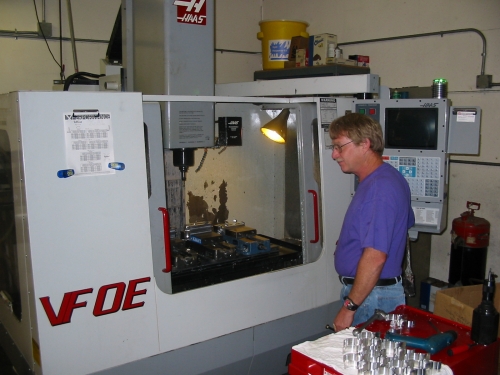
We have recently added the design, development and production advantages of in-house CNC capability with the purchase and installation of a new Haas Vertical Machining Center. This numerically controlled, three axis VMC allows for the more rapid development of new prototype parts and hardware, as new designs can go directly from 3D Cad generated files to finished prototypes and then to production parts, all in-house and without any of the normal delays inherent in outsourcing the machining processes.
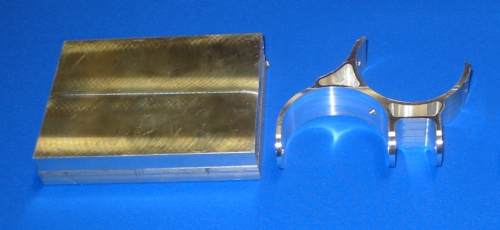
Wills Wing has always taken advantage of the superior structural strength and reliability that is provided by parts machined from solid wrought aluminum – by choosing to use these types of machined parts instead of less expensive, but structurally inferior castings. With the addition of the Haas VMC, we now have the ability to develop, prototype and produce this type of part entirely in-house, greatly expanding the scope of design possibilities and significantly contracting the length of the new product development cycle.
09/14/05
Demo Days Oct. 1-2 at Merriam Crater, Arizona
T2s, U2s, Sport 2s, Falcon 2s, and Falcon Tandem hang gliders will be available for demo flights. See Calendar for contact information.
09/13/05
Paragliding Service and Repair News
We have made some changes recently in our paragliding department, including a significant change in how we handle paraglider service work.
Mitch McAleer, who has been doing all of our service work in-house, and also administering paraglider sales and ordering, paraglider demos, etc., will no longer be working here in that capacity. The daily commute from Mitch’s home in Lake Elsinore to the Wills Wing factory in Orange has become all but impossible due to continually increasing traffic resulting from continuing growth and development in the areas between here and there.
Starting now, we will be referring all service work outside of Wills Wing. Mitch will continue to do service work at his own shop in Lake Elsinore, and we have also contacted Bill Anderson, of Rising Air Paragliding Repair in Moore, Idaho, and confirmed that he is prepared to accept service work from our dealers and customers.
In order to expedite the turn around on service work and keep the process as simple as possible, we will ask you to deal directly with either Mitch or Bill when you need repairs, annual inspections, line replacements, etc. We will be working with each of them to make sure they have the technical support they need to provide the service you require, but they will be handling all of the orders, receipts, billing, and return shipping on any service work that you have.
Their contact information is:
Mitch McAleer
29120 Melby Drive
Lake Elsinore, CA 92532
Phone 951 674-8844
Email: lucky.crater@verizon.net
Bill Anderson
Rising Air Paraglider Repair
PO Box 620
3171 North 3370 West
Moore, ID 83255
Phone 208-554-2243
www.risingair.biz
Email: billa@atcnet.net
Mike Meier will be handling the administration of paraglider ordering and sales here at Wills Wing – if you have questions that your dealer cannot answer, you can send an email to mike@www.willswing.com
09/13/05
Technical Bulletin: Xbar Center Hinge Pin Replacement
We have recently issued a technical bulletin (TB20050621 Xbar Center Hinge Pin Replacement) regarding the crossbar center hinge pin. This bulletin applies to most gliders using the UHMW plastic Ball and Socket Xbar center section (Falcons, Falcon 2’s, Falcon Tandems, Condors, XC’s, Ultra Sports, Eagles, U2’s, and Sport 2’s). To access the bulletin, click the link above or access the bulletin through the Technical Bulletins area of the Support section of our web site.
We will be supplying Wills Wing dealers with the parts necessary to perform the specified upgrade, and we request you contact your local dealer to obtain the upgrade, in order to insure that you have all the information or assistance you need to make sure that the installation is done correctly.
08/31/05
T2 Makes Strong Showing at Brazilian Open
Pilots flying our new T2 hang gliders finished 2nd, 3rd, and 4th in the recently completed Brazilian Open – Brasilia 2005. There were 8 T2 pilots flying against 31 Moyes pilots, and T2 pilots won 3 of the 7 tasks in the meet. Our second place finisher, Leo ‘Maskara’ Dabbur, was a mere 19 points (out of 6201) behind the winner. Pilots report that the T2 climbs better than the competition and glides just as well. We think these excellent results promise more wins for the T2 in the near future.
| Results – Brasilia 2005 | |||
|---|---|---|---|
| 2nd | Leonardo Dabbur | 'Maskara' | T2 154 |
| 3rd | Paulo Eduardo Baz | 'Cambuquira' | T2 144 |
| 4th | Alvarado Figueiredo Sandoli | 'Nene Rotor' | T2 144 |
Congratulations Guys!
07/25/05
Option Changes for Falcon 2 and Eagle
AT Style Streamlined Leg option, Folding Speedbar option, Wheel Brackets for Outboard Wheels option discontinued on Falcons and Eagles.
We are discontinuing, effective now, the option for AT style streamlined legs, folding speedbar, or wheel brackets for outboard mounted wheels on glider orders for Falcons and Eagles. (These options have never been available on any of our other current production models.) We are close to being out of stock on some of the parts required to offer these options, and the combination of the lack of significant demand for these options, with the high cost of small production runs, makes it not feasible to continue to offer them. We apologize for any inconvenience this may cause.
The slip-onto-basetube versions of the Hall and Finsterwalder wheels are still available.
07/24/05
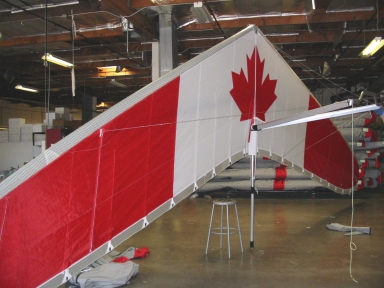
T2 with Canadian Maple Leaf
This T2, with a Canadian flag motif on the bottom surface, looked great fully setup in our Final Assembly area. We’re sure it will look at least as good flying in Canadian skies after we ship it North to its proud new owner.
07/18/05
Bo Goes Long!
No radio…
No driver…
No double surface …….
– No problem!
On Monday, July 18th, 2005, Bo Hagewood flew an incredible 180 miles from Zapata to near Del Rio, Texas in a Wills Wing Falcon 195! This is, as best we know, the longest flight in history on a single surface flex wing hang glider.
Bo had spent the morning as one of two tug pilots towing up all the pilots at the World Record Encampment. After the other pilots were taken care of, Bo took a tow to 3000 feet in Pete Lehmann’s Falcon. For the rest of the afternoon, he worked lift and drifted downwind, flying farther than all of the competition class flex wings for the day.
Our congratulations to Bo on a truly amazing flight!
07/01/05
T2 Pilot is 2005 Finnish Champion
Kari Vuoppola has won the 2005 Finnish championship with his brand new T2 hang glider. Mr. Vuoppola managed to win the event by a comfortable 15% margin despite having only taken delivery of his T2 the day before the competition started, and getting a zero on the first round (as a number of other pilots did) due to poor conditions.
Congratulations Kari!
05/25/05
PG Demos at Starthistle Meet and the Rat Race
Mitch McAleer will be hosting demo days in Oregon during the the Starthistle Meet and the Rat Race. See our Calendar section for details.
05/06/05
Rotor Kick-Ass Harness Slider Replacement Instructions On Website
Wills Wing has now completed preparation of Rotor Kick-Ass Harness slider replacement kits, and they are being shipped to all Kick-Ass owners who have already requested the retrofit; those pilots will receive emails from WW notifying them of shipment. The instructions for making the change are available in the Technical Bulletins section of our website. The kit contains a current Rotor Harness manual, replacement bars and posts, and required fittings. Please see the March 15, 2005 safety advisory for a description of the problem and instructions for obtaining the retrofit kit.
04/27/05
Bay Area Demo Days Rescheduled for 14-15 May, 2005
We feel it’s important for Rob Kells to go to Canada this weekend to be with Chris Muller’s Mom and friends, and join them in the celebration of Chris’ life.
We have rescheduled the WW demo weekend in the Bay Area for May 14th and 15th.
We apologize for any inconvenience this may cause.
04/22/05
T2 Hang Glider Released
We are now announcing the release of the new T2 competition class glider, and we are accepting orders for the T2 144 and T2 154. All vehicle tests (positive and negative load tests, and pitch tests), and all flight tests have been completed on both sizes of the T2. We have not yet filed an application for HGMA Certification on the T2.
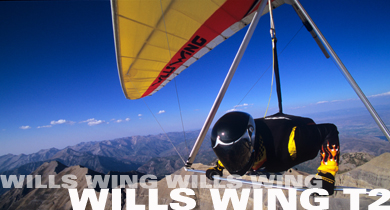
The price of the T2 is $400 higher than the price of the Talon – base suggested retail price for a T2 purchased from inventory is $6275. For more detailed information on the T2, including a full list of features, specifications and options, please see the T2 page.
We estimate delivery times of six to eight weeks for the initial orders received. Delivery times may increase on later orders depending on the volume of orders received.
04/20/05
Paraglider Demos in Florida
Mitch McAleer will be in Florida to fly in the East Coast Paragliding Championships and will be offering demos of current Airwave and Swing paragliders including the Astral 4, Mustang, Sport 2, and Mistral 3. Demos will be available for a few days before the competition and then during the competition whenever Mitch isn’t flying in a task. See our Calendar page for dates and locations.
04/13/05
T2 & Nene Rotor Lead in Brazilian National Championship Series
In the just completed April 2005 Brazilian Nationals Competition, Nene Rotor flew the new Wills Wing T2 competition class glider in its first competition, and took second place behind World Champion Oleg Bondarchuck. Nene finished ahead of all Brazilian competitors to take the lead in the Brazilian National Championship series. After posting only a “pretty good” score on his first competition flight on the glider, Nene proceeded to beat his nearest competitor, Betinho Schmitz, on each of the next five consecutive rounds to secure the top Brazilian placing in the meet.
04/11/05
Wills Wing T2 in the New York Times
There was an article in the New York Times Business Section about Wills Wing, Mike Meier, and the T2 hang glider. You have to register with the NYT website to be able to read the article.
03/22/05
The Wills Wing T2 – Demos at Wallaby
The Wills Wing T2 is an all new competition class glider that will replace the Talon in our product line. The planform is similar to that of the Talon, but virtually everything else has changed.
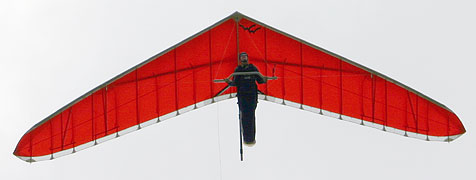
Major Hardware and Airframe Re-design – Featuring:
- Reduced Glider Weight
- More Rigid Sprog System with Compensating Inboard Sprogs
- Large Diameter, 60mm Front Leading Edges with eccentric reduction to 50mm rear leading edges
- Expanded Range Cam-less VG System that re-positions crossbar center section
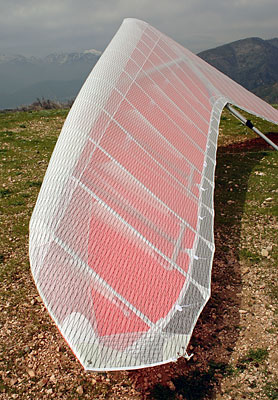
New Sail Design – Featuring:
- Smoother, cleaner sail surface
- Reduced twist
- Increased double surface
- Re-designed airfoil shape
We will have one of each size (144 and 154) available for demo at Wallaby Ranch April 5th – 10th. We also plan to have about five pre-production T2s flying in the Quest contest.
We expect to release the T2 sometime during the next several weeks, with customer glider deliveries beginning within three to four weeks after release.
03/15/05
Rotor Kick-Ass Harness In-flight Failure – Follow-up
SAFETY ADVISORY
Rotor Kick-Ass Harness In-flight Failure – Kick-Ass and Vulto Harness Service Advisories.
As we have previously reported, a Southern California pilot had an in-flight failure of his Rotor Kick-Ass harness on January 13 th, 2005. The steel rod by which the main support strap is secured to the harness pulled free from its mounting points and as a result of the failure the pilot’s control of the glider was compromised, which resulted in a crash landing and injuries to the pilot.
Wills Wing has now completed its investigation of the incident, including multiple structural tests on Rotor Kick-Ass and Vulto harnesses. (The earlier Kick-Ass harness design has been superceded by the newer Vulto – Wills Wing imported our last Kick-Ass harness in September of 2002.) Our findings, in brief, are as follows:
After the incident, we conducted tests on another Rotor Kick-Ass harness from our inventory. In those tests a measured load of 1550 lbs was applied to the slider rod, with the slider positioned at a position 60% of the way between the full aft and full forward position. This was the position of maximum bend in the rod from the incident harness, from which we concluded that this was the slider position when the harness failed in the incident. In our tests, the rod bent, and the composite backplate cracked, but the rod did not pull free from the mounting points. Based on comparing the shape of the slider rod from the tested harness to that of the rod from the incident involved harness, and noting that they had virtually identical bends, and based on independent lab tests showing that the two rods were of the same material strength, we have concluded that the rod in the incident harness was subjected to a load during the incident of approximately 1550 lbs, which would have been about 6.6 G’s for the pilot who was involved in the incident.
Based on these test results, and on a report to us of the condition of the glider after the incident, and on discussions with the pilot, we believe that the most likely sequence of events in the incident was as follows: the pilot set the VG to full tight, and pulled in to the full forward position, flying the glider to its maximum steady state speed. The pilot then began to slow down gradually, and while still traveling at near maximum speed, the VG rope slipped out of the cleat and the glider went immediately to VG full loose configuration. As is typical for a competition class glider in this flight condition, this caused an extreme and sudden pitch up of the glider, resulting in a sudden load in excess of six G’s, which caused the harness failure. The pilot then maneuvered the glider to a crash landing as well as he was able to, given the significantly compromised ability to control the glider that resulted from the harness failure.
A utility class hang glider, when operated within the manufacturer’s recommended operating limitations, would not be expected to experience a load in excess of 4.5 G’s. Given that the load in the incident was likely almost 50% higher than this, it is likely that the harness would not have failed under the normal maximum loads to be expected during operation of the glider within the recommended operating limitations. However, as this incident, and many other incidents in the past make clear, it is not uncommon for pilots to exceed the recommended operating limitations of their gliders, and in some cases they may execute maneuvers (like the sudden pitch up in this incident) that are not intentional.
Wills Wing therefore believes that in the best case, the pilot’s primary connection to the harness should not fail under a load that might be reasonably expected in flight operations – even if those operations are significantly outside the recommended operating limitations for the glider. Based on the typical ultimate strength and speed range of a high performance glider, we feel that the primary pilot to harness connection should be capable of withstanding a load of up to eight G’s without sustaining a failure such as that which occurred in this incident.
Wills Wing has designed a new slider rod and attachment hardware system for the Kick-Ass harness, which we have tested to 2000 lbs (8 G’s for a 250 lb pilot). At that load, in our tests, the slider rod bent slightly, and the harness backplate underwent significant damage, but the slider rod remained attached to the backplate.
Wills Wing has also conducted tests on several Vulto harnesses to determine whether it is likely that the slider rod could be pulled free from the harness in a similar incident. Our tests indicate that this is not likely to happen on the Vulto – that although the rod may bend, and the backplate may be damaged, the rod will remain attached to the harness backplate at loads up to 2000 lbs.
As a result of our tests and our investigation, Wills Wing is issuing the following recommendations:
- We recommend that owners of Kick-Ass harnesses upgrade to the new slider hardware system that we have designed, both because it is substantially stronger, and because it is more secure, and less likely to be subject to inadvertent disassembly.
- All pilots who own or fly with a Rotor Kick-Ass or Vulto harness should inspect the harness immediately, and should continue to do so on a regular basis. The steel rod to which the main support slider is attached should be straight, and any nuts or bolts on the hardware that secures the rod to the backplate should be snug and secure. Locking nuts on the Vulto hardware should have the threads on the bolt fully engaged in the locking portion of the nut. On Kick-Ass harnesses, the aluminum backing plate on the other side of the composite backplate from the rod should not be deformed. The composite backplate itself should be free of cracks in the vicinity of the rod attachment. If any of the above conditions are not met, the harness should not be flown until those conditions have been corrected.
- Both the Kick-Ass and Vulto harnesses were designed to be operated in maneuvering flight with the main support slider in the full aft position on the steel rod. The manufacturer’s initial testing of the harness design, during which the harness was loaded to 700 kg (1540 lbs) was done with the slider in this position. For instructions on how to adjust the mechanism that positions the slider in flight, please see the updated version of the Rotor Owner’s Manual here. If the slider is not in the full aft position during maneuvering flight that involves loads in excess of 2 G’s, it is likely that the rod will be bent. If the pilot rocks up in the harness during a maneuver, this could cause the slider to move forward. The rod could also be bent as a result of a crash landing.
- Neither the Kick-Ass nor the Vulto harness was designed for maneuvering outside of the normal placarded limitations of a utility class hang glider (for hang gliders certified to HGMA standards, for example, these limitations include: maximum maneuvering speed 46 mph / 74 kph and speed never to exceed 53 mph / 85 kph).
- During maneuvering flight involving very high G loading it is possible that structural failure of the harness may occur at a load that is less than the ultimate load that the glider will withstand without failure. Neither the Kick-Ass nor the Vulto harness was designed for aerobatic flight. (The incident above did not involve any intentional aerobatic maneuver – however aerobatics is one common way in which higher than normal G loads can be produced.)
- Irrespective of the type of harness used, pilots should be aware that a sudden transition from VG tight configuration to VG loose, while flying at high speed, such as could happen if the VG rope slipped from the cleat, will usually cause a severe pitch up that the pilot will not be able to adequately control, and that this can result in a very dangerous flight condition. Some competition pilots guard against this by keeping a wrap of the VG rope around their hand when flying fast with the VG engaged.
Wills Wing will provide retrofit kits with the new slider hardware at no charge to owners of Kick-Ass harnesses who purchased those harnesses through Wills Wing (now available). For other owners of Kick-Ass harnesses who want to upgrade, we will provide the hardware retrofit at our cost, plus shipping – approximately $30 total within the US and $50 total outside the US. If you are a Wills Wing Kick-Ass customer, and you have already contacted Wills Wing with your address, and you are receiving this notice by mail or email, we will be shipping the retrofit to you automatically, as soon as it is available. If you have not yet contacted us, please contact us by email at (rotor@www.willswing.com), by postal mail (500 West Blueridge Ave., Orange, CA. 92865 USA) or by telephone (714 998-6359) in order to request the retrofit and provide us with your name, the serial number or size, color, and date of purchase of your Kick-Ass harness, and a mailing or shipping address to which we can send the retrofit kit.
Wills Wing will also provide replacement slider rods (120,000 psi yield strength) for Vulto owners who find on inspection that they have bent rods on their harnesses. For owners who purchased their Vulto harness through Wills Wing, we will provide the replacement rods at no charge. For other Vulto owners we will provide the replacement rods at our cost, plus shipping – about $15 total within the US and about $35 outside the US. If you are a Vulto owner, and find on inspection that you have a bend slider rod, please contact us by email at (rotor@www.willswing.com), by postal mail (500 West Blueridge Ave., Orange, CA. 92865 USA) or by telephone (714 998-6359) to request a replacement rod. Please provide us with your name, the serial number or size, color, and date of purchase of your Vulto harness, and a mailing or shipping address to which we can send the replacement rod.
Thank you and please fly safely,
Wills Wing
02/15/05
Give Wings To Your Imagination
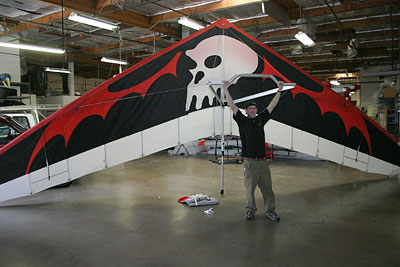
Wills Wing employee Josh Winstead shows off his brand new custom Sport 2 155. The custom sail inlay design was developed with help from Wills Wing’s paragliding department head Mitch McAleer, and Wills Wing designer Steve Pearson produced the digital patterns for cutting the sail on Wills Wing’s computer driven automated sail cutting machine. Wills Wing’s experienced sailmakers can produce a wide range of custom patterns to help you express your individuality in the design of your new wing. Quotations for custom sail work based on a representative drawing are available on request.
01/28/05
Airwave Mustang Update
Airwave Mustang Update:
The M size deliveries are due in two to three weeks, with the first M demo going to San Francisco. Contact Merlin Flight School, Wally Anderson (tipvortx@sbcglobal.net).
Airwave announced this week, Jan. 28, 2005, that the S and L sizes of the Mustang are projected to be complete and ready for delivery in six weeks. The XS and XL sizes will be produced and will not be DHV certified. Projected deliveries to begin some time after the S and L are in production.
01/21/05
Safety Advisory – Rotor Kick-Ass Harness In-flight Failure
SAFETY ADVISORY
See Follow-up Advisory issued 3/15/05
Rotor Kick-Ass Harness In-flight Failure
On January 13th, 2005 a Southern California pilot had an in-flight failure of his Rotor Kick-Ass harness. While slowing down from a high speed dive, the steel rod by which the main support strap is secured to the harness pulled free from its mounting points. As a result of the failure, the pilot fell onto the harness backup support, which resulted in the pilot hanging significantly lower in the glider, and which compromised the pilot’s control of the glider, leading to a crash landing. The pilot suffered significant injuries in the incident, though at this time it appears he is making a full recovery.
Wills Wing, in cooperation with Nene Rotor, the designer and manufacturer of the harness, is conducting an investigation of the incident, including examination and testing of the incident harness as well as testing of additional Rotor Kick-Ass and Vulto harnesses from stock. It is not known at this time under exactly what load or circumstances the above-described failure occurred. Based on what is known thus far, it is likely that, at a minimum, an advisory regarding modifications to all Kick-Ass harnesses will be issued. Owners of Kick-Ass harnesses are asked to contact Wills Wing via email (rotor@www.willswing.com), postal mail (500 West Blueridge Ave., Orange, CA. 92865 USA) or telephone (714 998-6359) in order to provide us with your name, the serial number or size, color, and date of purchase of your Kick-Ass harness, and a mailing or shipping address to which we can send further information or modification instructions.
In the meantime, all pilots owning Rotor Kick-Ass or Vulto harnesses are advised of the following:
- All pilots who own or fly with a Rotor Kick-Ass or Vulto harness should inspect the harness at this time. The steel rod to which the main support slider is attached should be straight, and any nuts or bolts on the hardware that secures the rod to the backplate should be snug and secure. On Kick-Ass harnesses, the aluminum backing plate on the other side of the composite backplate from the rod should not be deformed. The composite backplate itself should be free of cracks in the vicinity of the rod attachment. If any of the above conditions are not met, the harness should not be flown.
- Both the Kick-Ass and Vulto harness were designed to be operated in maneuvering flight with the main support slider in the full aft position on the steel rod, and all initial testing of the harness design was done with the slider in this position. For instructions on how to adjust the mechanism that positions the slider in flight, please see the updated version of the Rotor Owner’s Manual.
- Neither the Kick-Ass nor the Vulto harness was designed for maneuvering outside of the normal placarded limitations of a utility class hang glider (for hang gliders certified to HGMA standards, for example, these include: maximum maneuvering speed 46 mph / 74 kph and speed never to exceed 53 mph / 85 kph).
- During maneuvering flight involving higher than normal G loading it is possible that structural failure of the harness may occur at a load that is less than the ultimate load that the glider will withstand without failure. Neither the Kick-Ass nor the Vulto harness was designed for aerobatic flight. (The incident above did not involve any intentional aerobatic maneuver – however aerobatics is one common way in which higher than normal G loads can be produced.)
Wills Wing will be aggressively pursuing further investigation as to the specific cause of the harness failure incident, along with the development of any needed modifications to bring all harnesses to an appropriate level of airworthiness. In order to be able to focus all available resources on this project, we ask that pilots not contact Wills Wing regarding this issue, except to provide us with your contact information, as requested above. As we develop more information on this issue, we will publish it at www.www.willswing.com
01/11/05
Hang Glider Prices Going Up February 1st
As of February 1st, retail prices on all hang glider models except the Talon will increase by $100. The new prices will be:
| Glider | SuggestedRetail Price |
|---|---|
| Falcon 2 140 170 195 | $3175 |
| Falcon 2 225 | $3375 |
| Falcon Tandem | $3775 |
| Eagle | $3575 |
| Sport 2 | $4375 |
| U2 | $4775 |
| Talon | $5875 |
(Orders received by Wills Wing prior to February 1st will be at the current prices.)